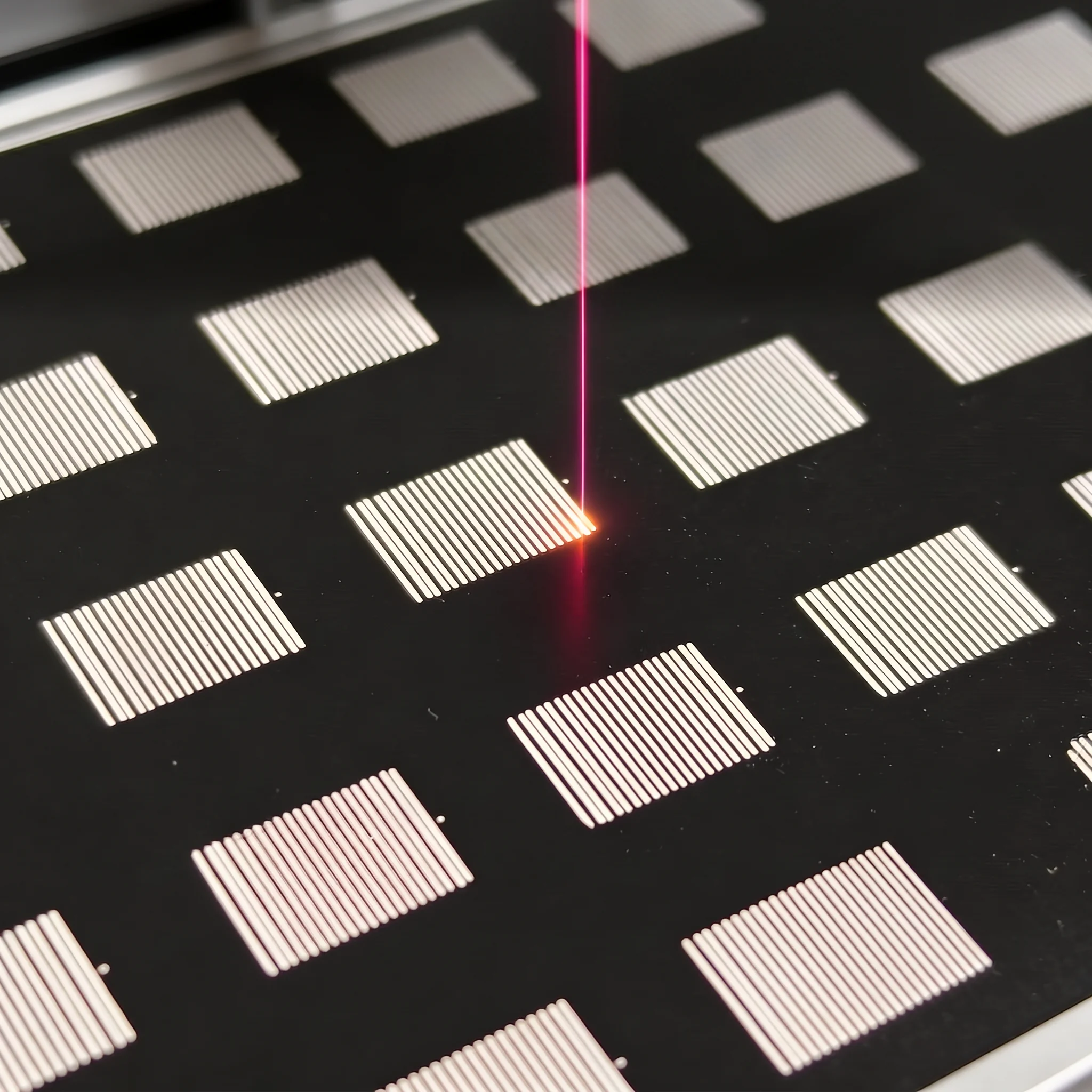
focusfinder.pro precisely determines the real focal-point position of a laser beam. It pairs a simple measurement routine with numerical analysis — removing subjective operator judgement and reaching accuracy down to 50 μm*.
focusfinder.pro · in process
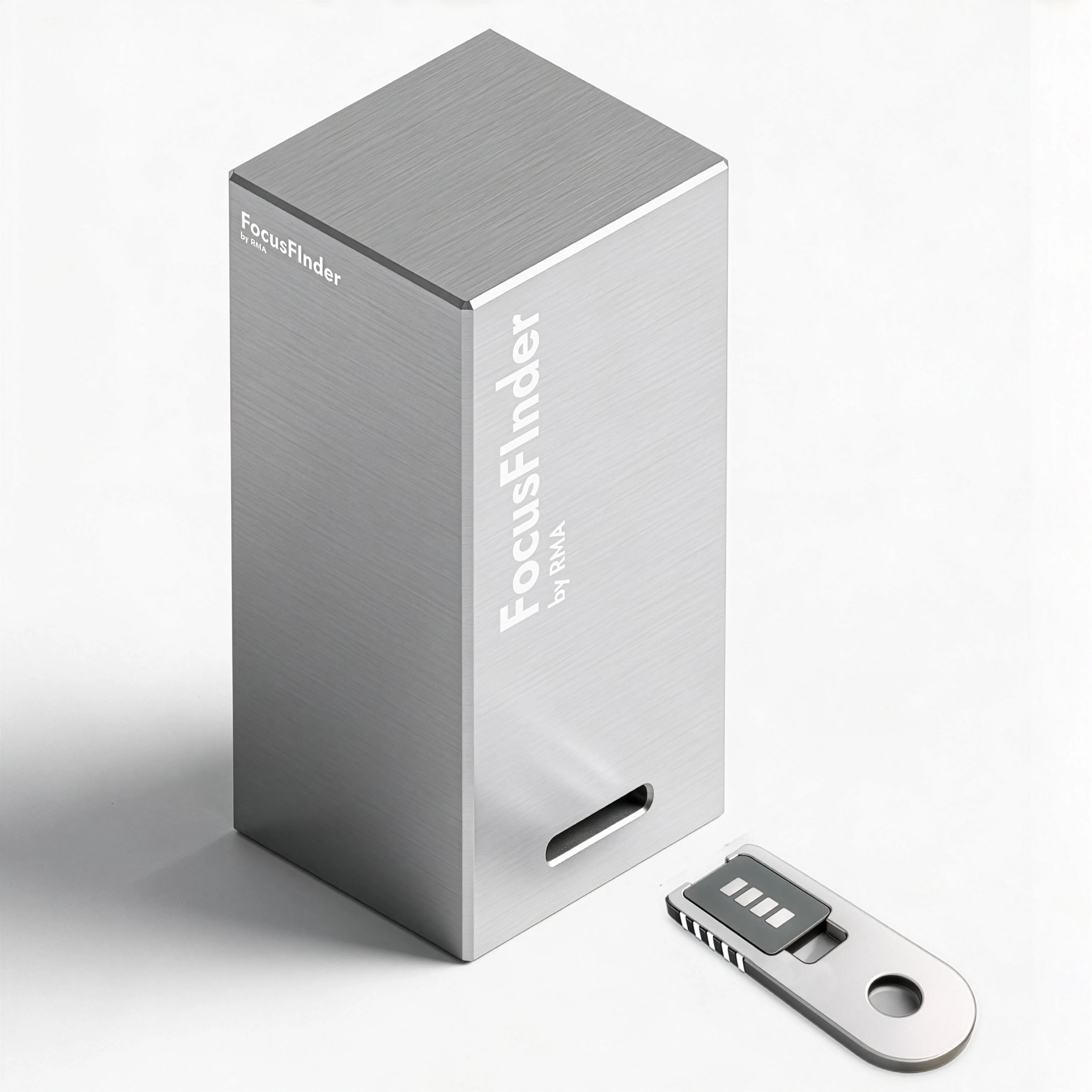
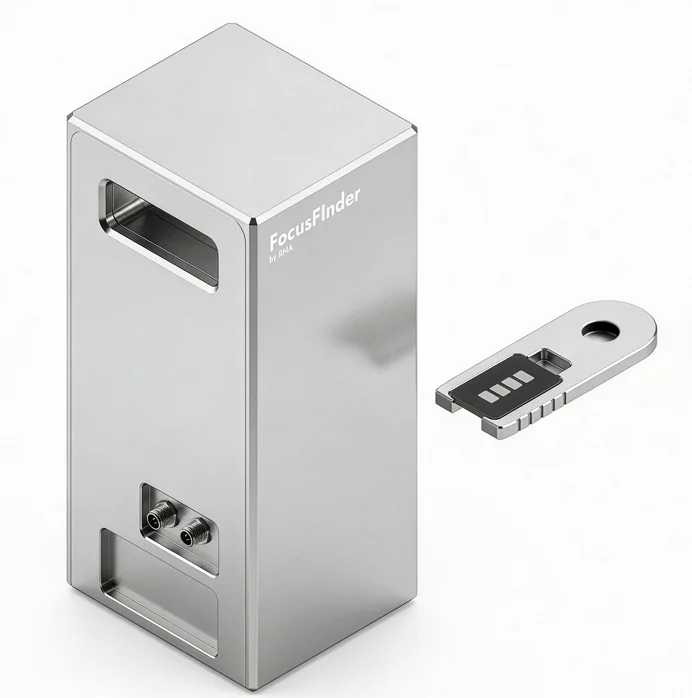
Device · case + key
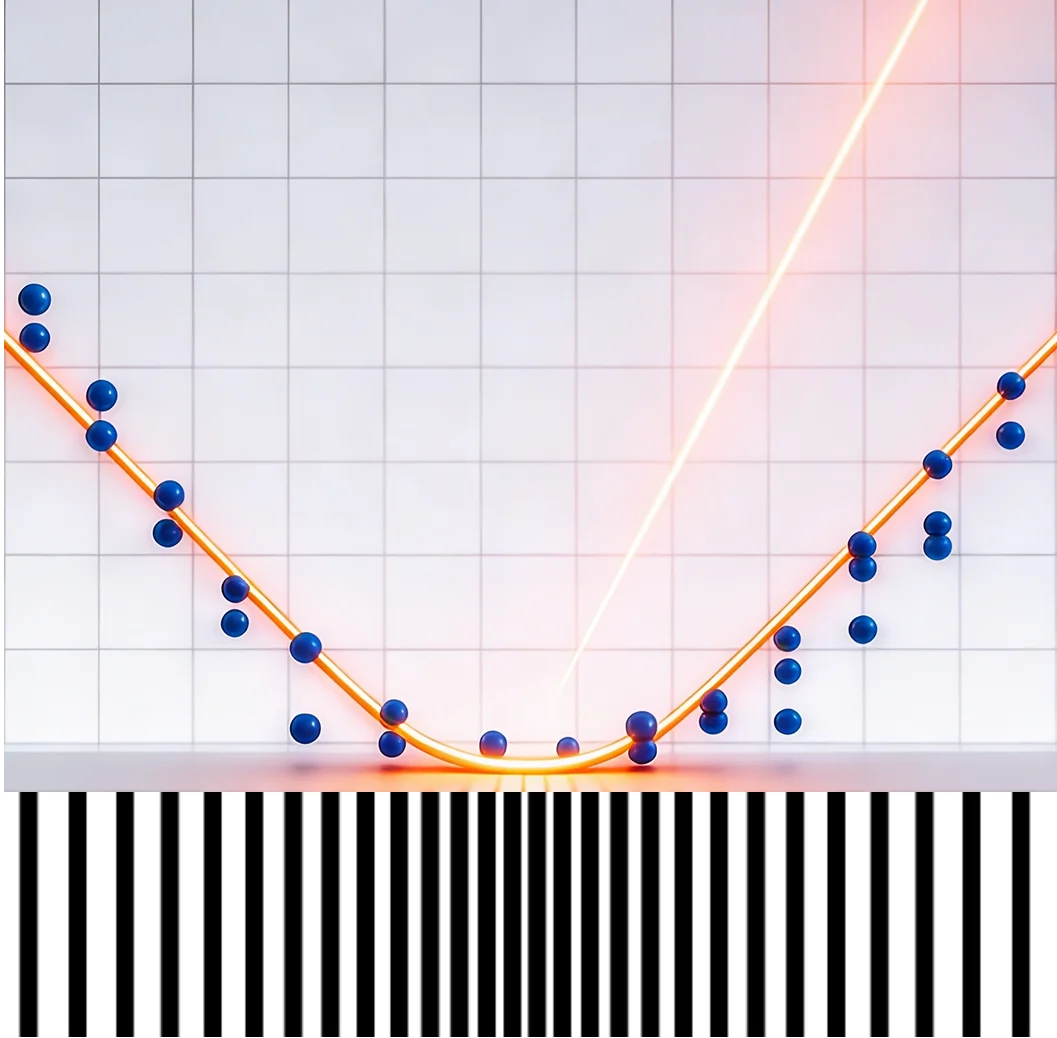
Result · beam caustic fit
In laser welding — and especially with thin copper and aluminium — even a small deviation of the focal point from the work surface translates into an unstable process and weld defects. Standard visual assessment can't resolve that. focusfinder.pro is a complete RMA measurement solution built to pinpoint the real focal position where it actually counts.
*depending on the customer's system configuration.
Enough for welding copper, aluminium and other hard-to-weld materials — exactly where pulsed and visual methods fall short.
Engrave a test pattern, capture the plate image, run the automatic analysis. No elaborate installation and no changes to the machine structure.
The result comes from a numerical fit of the Rayleigh curve of the beam caustic — not from a technologist's or operator's eye.
Unlike permanently mounted camera systems, focusfinder.pro moves between stations — lower cost to deploy and to run.
Accuracy close to camera systems at a fraction of the price — lower purchase and maintenance cost.
From an engraved test pattern to a numerical focal-position result — the operator runs the routine, the algorithm does the judging.
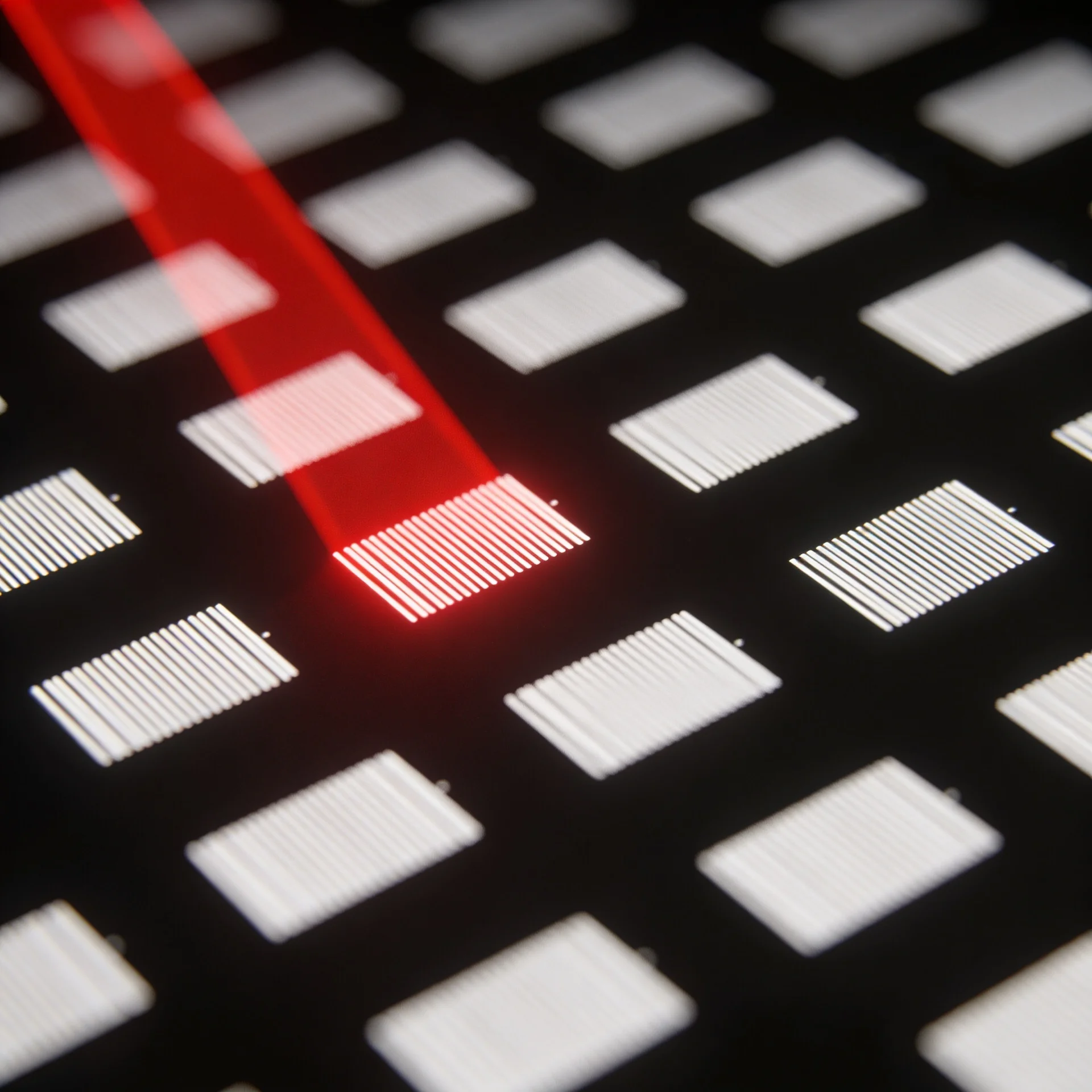
The laser writes the designed test pattern across the measurement plate.
The engraved pattern is digitised — the kit produces a clean digital image of the plate, ready for numerical analysis.
The algorithm fits the ideal profile and reports the laser's focal position to 50 μm* accuracy.
Laser welding programmes that demand repeatable focal positioning at the level of tens of microns.
Laser welding across electronics and power electronics — power modules, busbars, cell interconnects and IGBT / SiC components, where focal position must repeat to tens of microns.
Especially effective with small-spot lasers (from 30 μm) — infrared, green and blue sources — where focus tolerance is unforgiving.
Copper, aluminium, stainless steel and their bimetallic joints — processes where a focal-position error leads straight to weld defects.
From the Laser Application Center to the production floor — focal position is measured, set and logged inside a single process architecture. Applied per machine, not per batch.
Material trials, metallography and tensile testing validate the welding window before tooling is committed.
The real focal position is measured per machine to 50 μm — numerically, with no subjective assessment.
Focal position corrected per joint; beam shaping and power profile matched to the material pair.
Process signals captured per weld and logged per cell — documented, reproducible, audit-ready.
Laser welding programmes across e-mobility, energy storage and power electronics — where joint quality and traceability decide whether the product ships.
Cell-to-tab and busbar welds where focal drift turns straight into scrap and rework.
SEG · 02High-capacity stationary packs where consistency and traceability define safety certification.
SEG · 03Power modules, IGBT / SiC and busbars — high-current joints with an unforgiving focus tolerance.
SEG · 04Low-mass energy systems for drones and unmanned platforms — repeatability and full documentation.
SEG · 05Forklift, marine and AGV packs — heavy-duty assemblies where uptime outranks everything.
SEG · 06Small-spot welding of copper, aluminium and bimetals at production volume.
Technical articles on focal-point measurement, process parameters and battery manufacturing — written with the focusfinder.pro engineering team.

Laser power, welding speed, focal position and weld geometry — what each parameter does, and how to verify it in production.
Read article →
An invisible beam, a 50 μm focal spot, and a beam waist that refuses to become a point — why locating true focus is difficult.
Read article →
Pulse engraving, direct beam measurement and focusfinder.pro — accuracy, cost and practicality compared.
Read article →Engineered for process stability. Built for production reality.